
Self-loading concrete mixers · 1.0–4.5 m³
Self-loading concrete mixers, delivered to your port — not left at ours.
An export house working with plants across China’s construction-machinery manufacturing base.
Why not buy direct from the factory?
Because a plant’s price stops at the ship’s rail. The conformity certificate your customs demands, the container mode, the documents, the part that fails in month fourteen — all of that is still yours to solve. We quote the whole thing to your port, and we go and look at the machine before it is loaded.
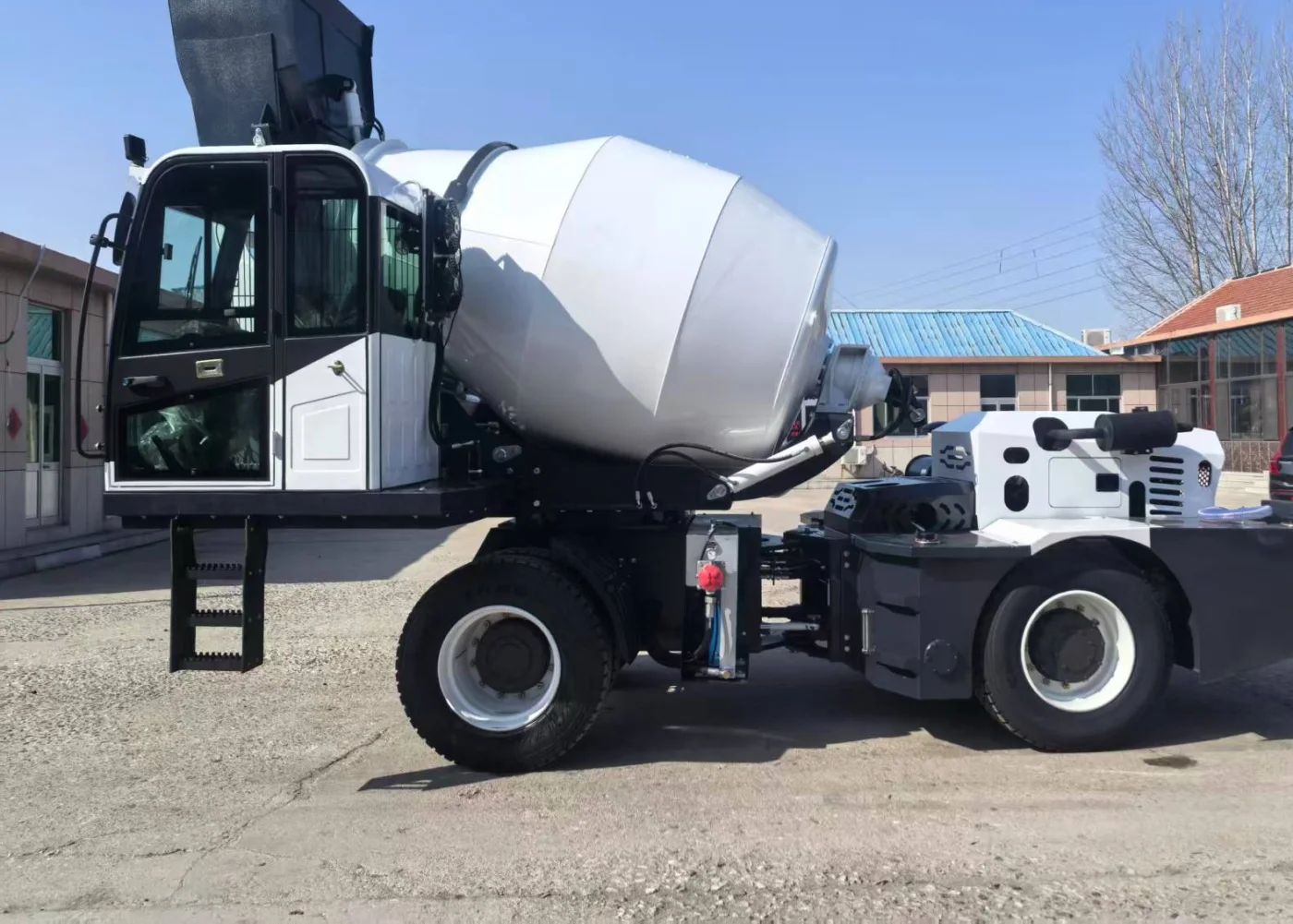
- 1.0 – 4.5m³
- Discharge per load
- 270°
- Drum lift and rotation
- CIF / DDP
- Quoted to your port
Why not buy direct from the factory?
It is the right question, and it deserves a straight answer. Here is the part a plant will not do for you.
- 01
The quote does not stop at the ship
“What happens after the machine is loaded?”
A factory quotes FOB and its job ends at the ship’s rail. Customs clearance, the conformity certificate your port asks for, inland haulage and registration are then yours to solve. We quote CIF or DDP: machine, ocean freight, certificate and export documents as one figure to your port.
- 02
One site needs more than one machine
“Why go through a trading house at all?”
A plant makes one product line. A site needs several. We put the same specification to more than one plant, compare what comes back, and consolidate the order into one shipment and one set of documents instead of several.
- 03
Somebody has to look at the machine
“Who checks it before it is loaded?”
A plant inspects its own work. We go to the plant before loading, work through the specification item by item, and send you a dated report with photographs. You see the machine you are paying for while it is still in China.
- 04
Someone has to answer when a part fails
“Who do I call when something breaks?”
The plant is in China and you are not. Claims, spare parts and rework go through us in English, against your machine’s serial number and the build sheet we keep on file.
After the machine is bought
Four things that decide whether it ever pours.
Buying the machine is the easy part. These four are where a first import usually goes wrong, and every one of them sits on the far side of a plant's responsibility. Each line below is a process you can hold us to, not a track record we are claiming.
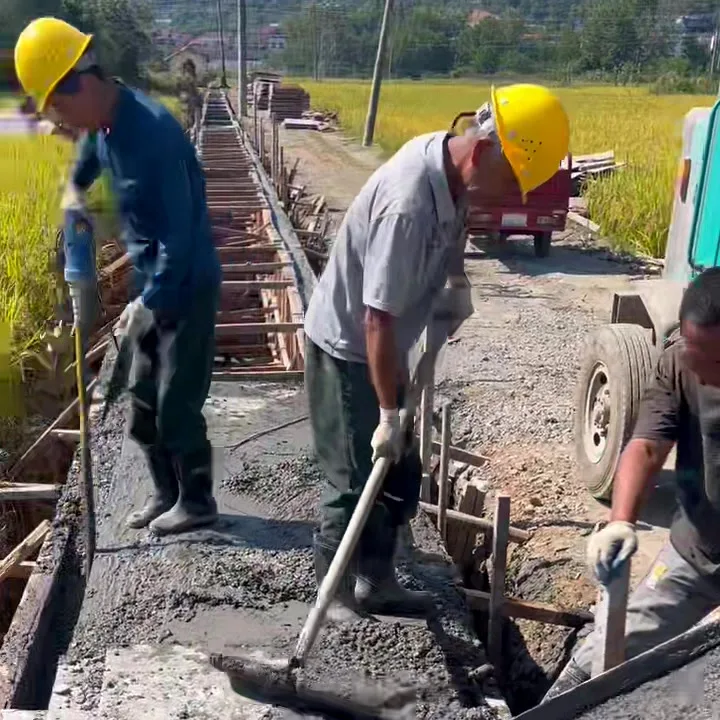
One machine, three men, a village road going down in one pass. “It arrived, and we still could not pour.”
It has to be the right machine, and it has to be complete
A drum size is not a specification. Before we put a number on anything we ask what you are pouring, what the ground is like and how far the aggregate travels — then quote the machine together with the things that have to travel in the container beside it.
What we do
- Specification matched to your ground, haul distance and crew, in writing before a price
- Wear parts, tool kit and first-service consumables quoted inside the unit, not discovered missing
- Operating and maintenance manuals in English, plus the operator walkthrough on video
What you end up holding
A specification sheet you can check line by line, and a packing list that says what is in the box.
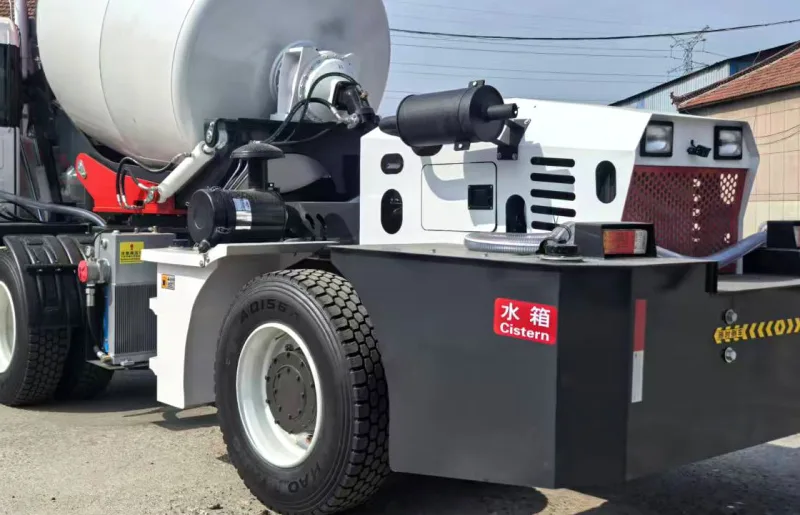
Engine bay, cooling pack and drive line — where the wear-parts list comes from. “It has stopped. Who do I call, and in what language?”
Something will fail, and the plant is eight time zones away
A plant answers in Chinese, in its own office hours, to whoever emailed it. We keep your build sheet — engine, pump, drive motor, filter references, serial number — so a fault turns into a part number instead of a conversation.
What we do
- A wear-parts list with part numbers ships with the unit: filters, seals, hoses, mixing tips
- Faults worked through in English on WhatsApp from your photographs and video — first reply within 24 hours, China time, Monday to Saturday
- Parts ordered against your machine's serial number, so a re-order does not restart the identification
What you end up holding
The build sheet and the parts list on day one, not after the first breakdown.
What you do not get: an engineer in your country. We would rather say so than promise one who is not there.
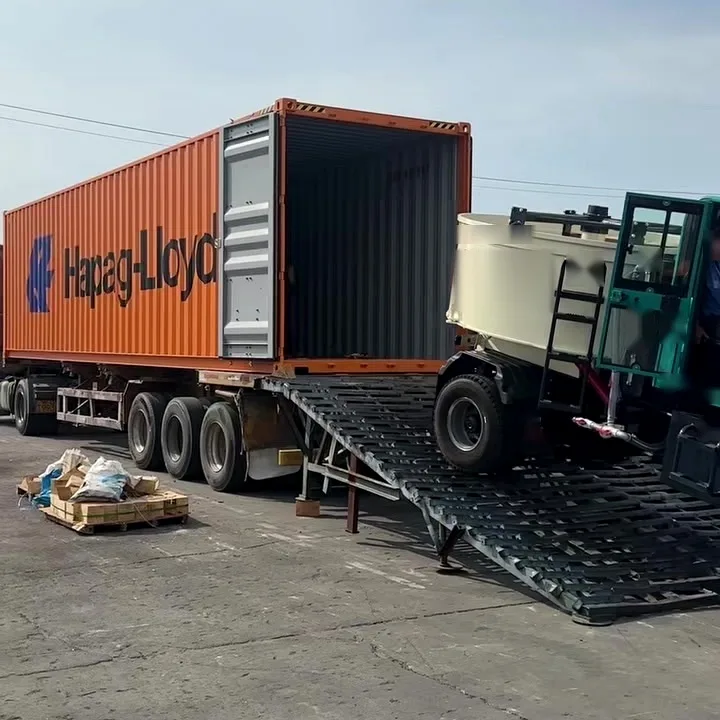
Up the ramps and into a 40-foot box. Photographed at a supply partner's yard. “Why is it on a flat rack, and can my port lift that?”
It has to fit, stay put, and come off again at your port
What stops a machine is the door frame, not the internal height: a 40HQ opens 2.585 m and leaves 2.535 m once you allow a handling margin. We settle the mode against that number and against what your port can actually discharge.
What we do
- Shipping height with the drum lowered confirmed in writing with the plant before any mode is quoted
- Container, flat rack, open top or RoRo chosen against your port's lifting capability, not against the cheapest thing to say
- Lashing and chocking specified for the mode chosen, and photographed at loading
What you end up holding
The mode, the booking and the reasoning behind both, in writing before the machine moves.
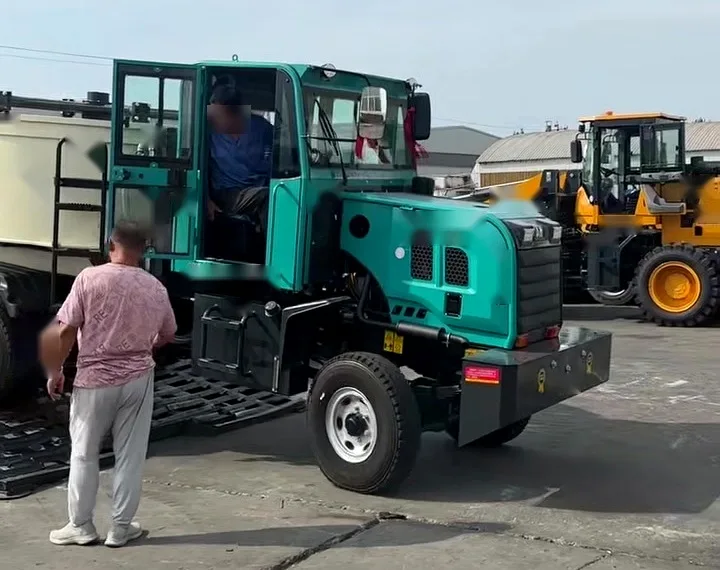
Pre-shipment checks in a supply partner's yard, ramps already laid out. “Our bank will not open the Form M, and will not say why.”
The certificate has to exist before your bank will move
Nigeria as the worked example: the Product Certificate is applied for in China first, your bank can only open the Form M once that exists, and the SONCAP Certificate is issued against the Form M. Run out of order, the delay looks like a shipping problem.
What we do
- Product Certificate applied for against the full 10-digit HS code through the e-SONCAP portal, before you commit money
- The regulatory status of your exact code confirmed in writing by an appointed inspection agent — we will not tell you a certificate is unnecessary
- Certificate cost built into the CIF or DDP figure at quotation, never raised after you have committed
What you end up holding
The certificate sequence already running, and its cost already inside the number you were quoted.
Kenya, Saudi Arabia and the UAE each work differently. We publish only what we have confirmed in writing.
Self-loading concrete mixers
The range
Discharge from 1.0 to 4.5 m³. One operator loads, mixes and pours.
- SLM-10
- Discharge
- 1.0 m³
Two units per 40HQ container
Full specification on request
40HQ - SLM-18
- Discharge
- 1.6-1.8 m³
- Rated power
- 78 kW / 105 hp
- SLM-24
- Discharge
- 2.4 m³
- Rated power
- 78 kW / 105 hp
Full specification on request
Flat rackOpen topRoRo - SLM-35
- Rated power
- 85 kW / 114 hp
Full specification on request
Flat rackOpen topRoRo - SLM-40
- Discharge
- 3.8-4.0 m³
- Rated power
- 91 kW / 122 hp
Full specification on request
Flat rackOpen topRoRo - SLM-45
- Discharge
- 4.0-4.5 m³
- Rated power
- 91 kW / 122 hp
Full specification on request
Flat rackOpen topRoRo
Shipping
Will it fit in a container?
What blocks a machine from a container is the door frame, not the internal height.
A 40HQ gives you 2.698 m inside — but only a 2.585 m door opening, and after a 5 cm handling margin you are working with 2.29 m wide × 2.535 m high.
How container shipping actually works →
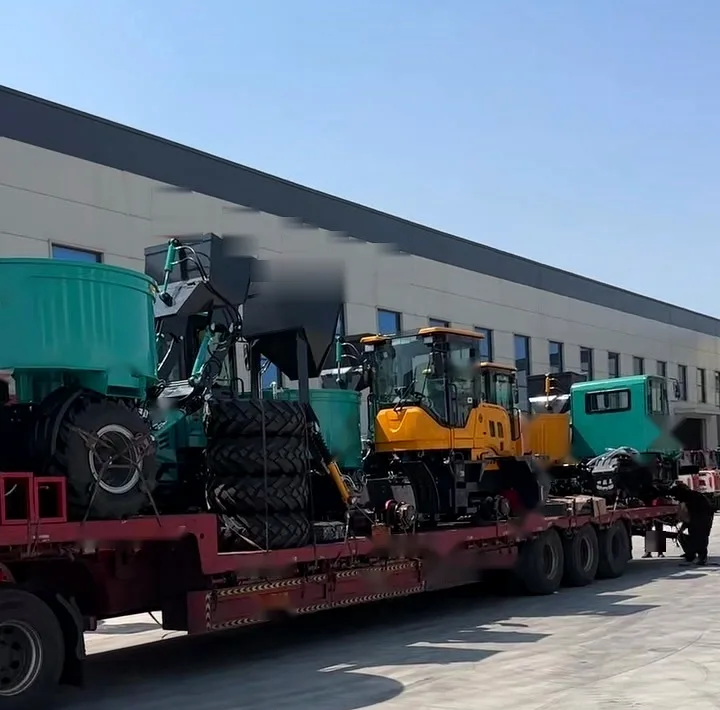
40HQ · usable door opening
2.29 × 2.535 m
- Internal height
- 2.698 m
- Door opening
- 2.585 m
- Handling margin
- 0.05 m
- Payload limit
- 26.5 t
Photographs, not renderings
The machines, the plants, and the loading — as photographed.
Everything in this section is a photograph. Nothing here is generated and nothing is a stock image. Where a picture is not ours to claim, the caption says whose it is.
- We do not own a plant. The yards and buildings below belong to the plants we buy from in China's construction-machinery manufacturing base.
- The outbound shipments are theirs as well. They show how a machine of this type is loaded and secured — they are not a record of our own exports.
- The pours carry no verifiable location, so we attach no country to any of them.
- Plant identification has been painted out and faces blurred. Nothing has been added to any of these pictures.
On site
Filmed on working sites. We cannot verify where, so we name no country.
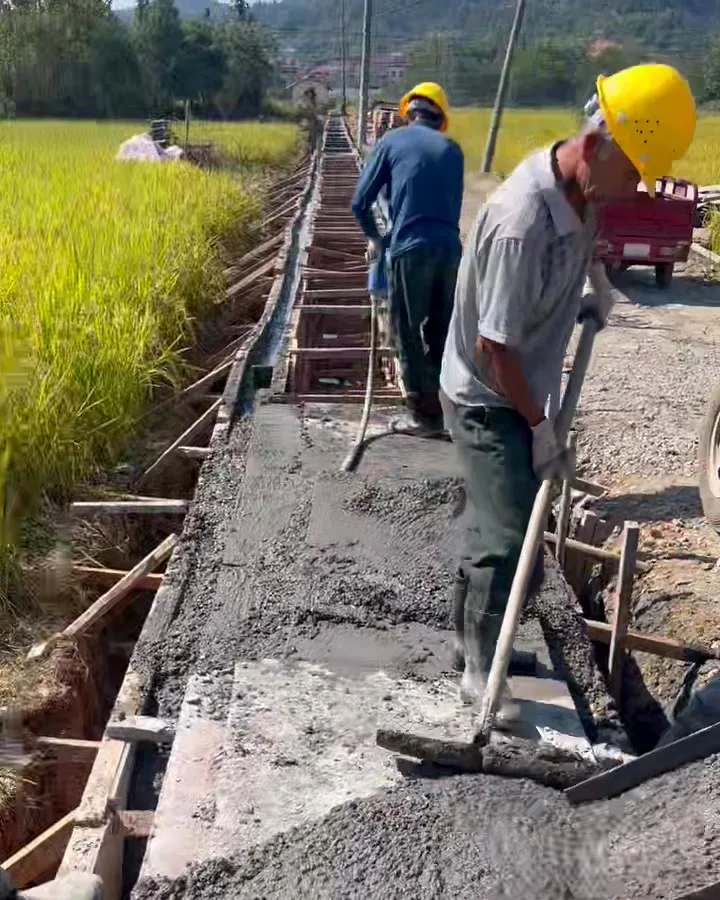
Actual pouring operationScreeding a strip pour beside a paddy field. Timber formwork, a three-wheeler for the aggregate, no ready-mix truck within reach — this is the job the machine exists for. 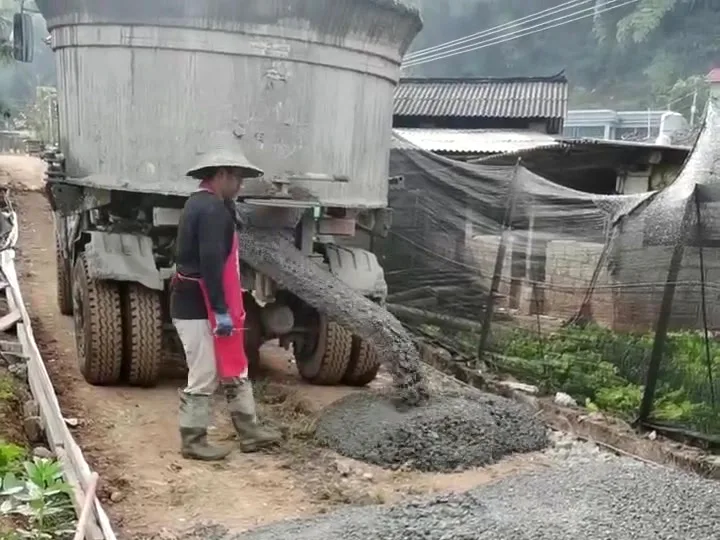
Actual pouring operationDischarging onto a village road. The drum is crusted with cured concrete: this is a working unit, not a demonstrator. 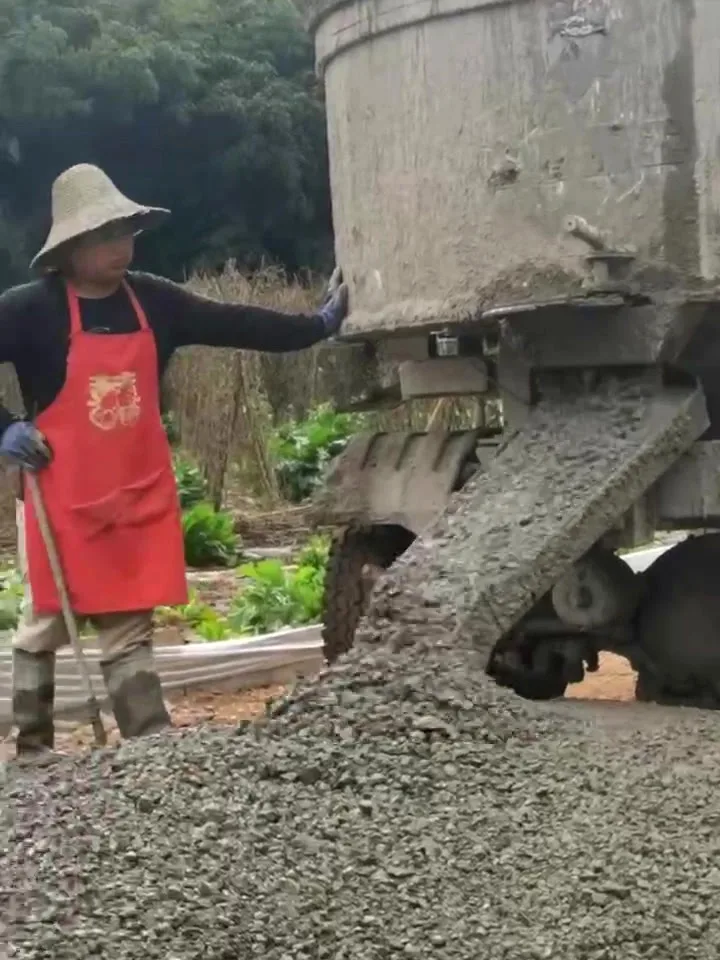
Actual pouring operationThe chute at working height. The man's hand on the drum gives you the scale of the opening. 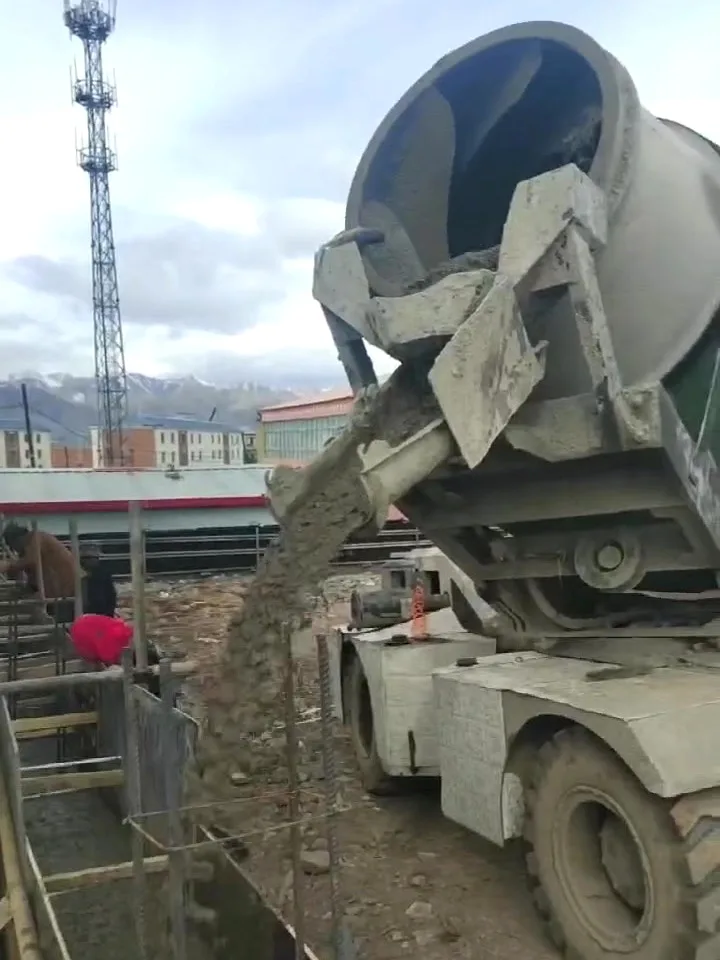
Actual pouring operationMix leaving the drum into a footing, mountains behind it. The drum is tipped over the chute and the load is running out under its own weight. 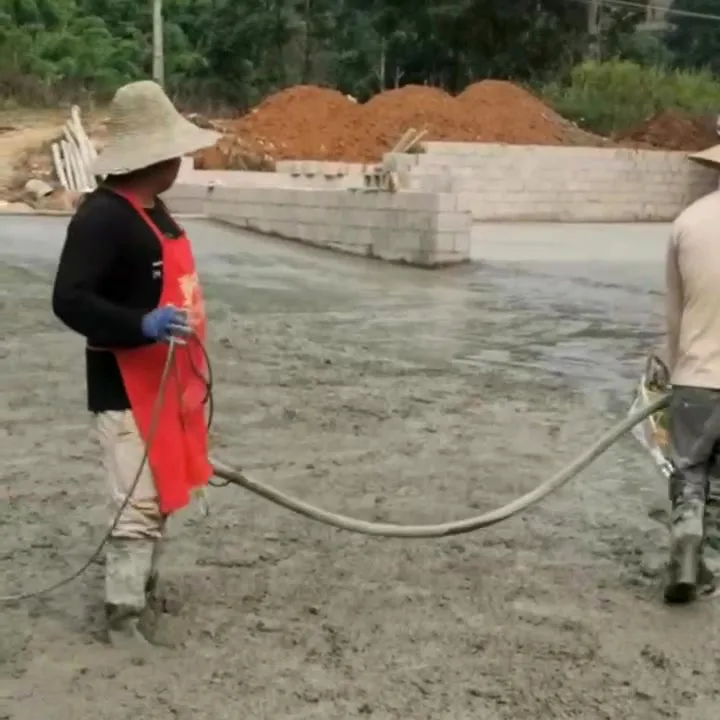
Actual pouring operationPoker vibrators through a slab, minutes behind the discharge. Blockwork and spoil heaps behind it: a live site, not a yard. 
Actual pouring operationFive men spreading a slab in the tropics. We cannot verify where this was filmed, so we name no country for it. 
Actual pouring operationTied reinforcement, timber formwork, an excavator and a tipper on the same footing — hi-vis and boots on the man standing over it. 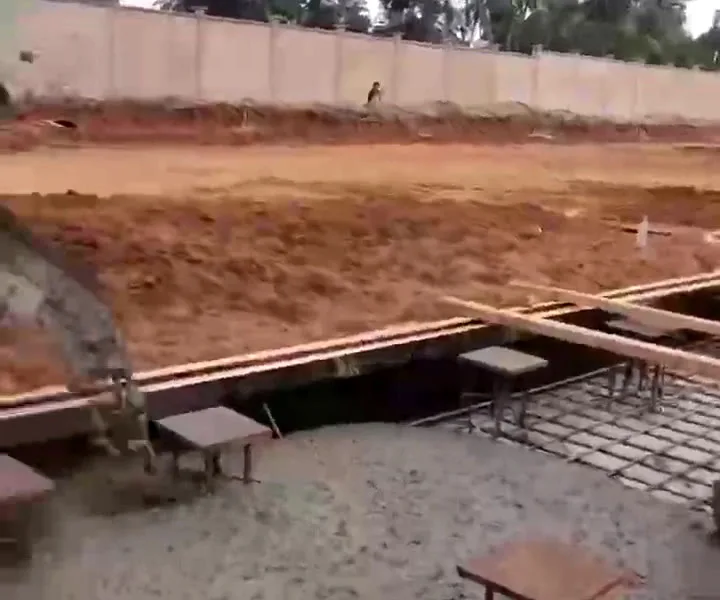
Actual pouring operationThe same work seen wide: strip footings, blinding down, formwork set out to the boundary wall.
On the machine
Photographed before shipment, with plant identification removed.
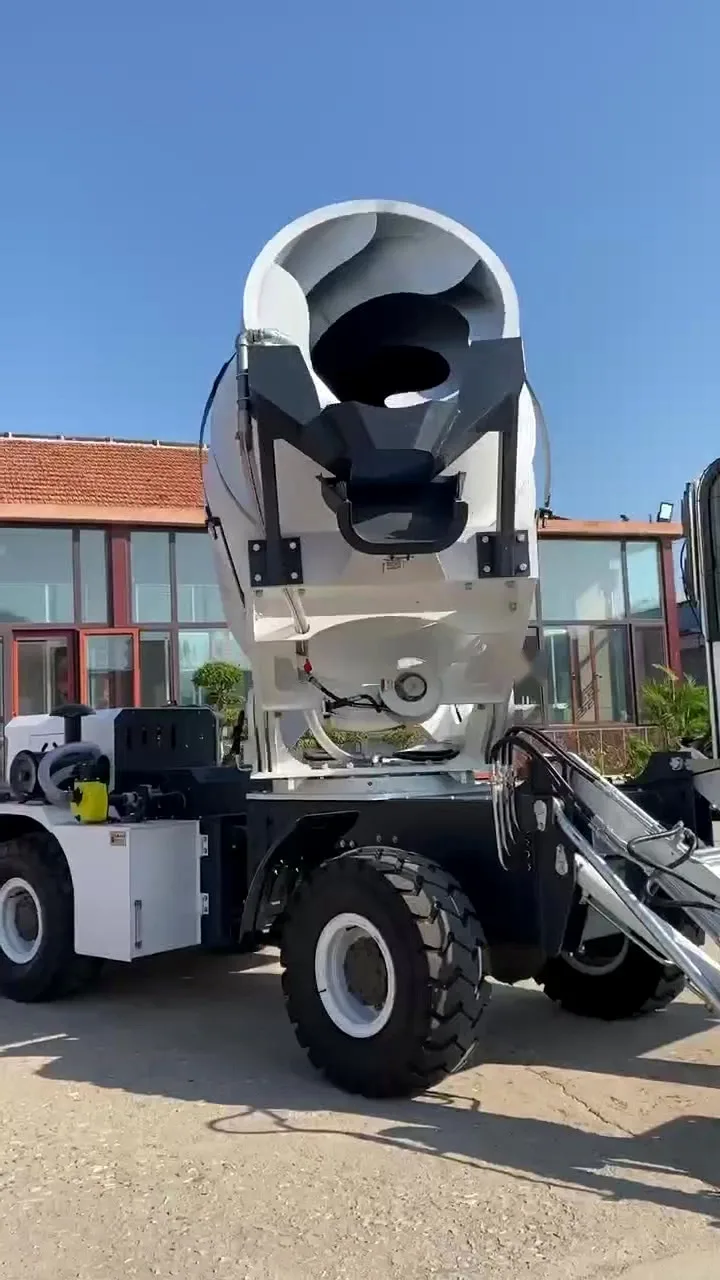
Machine detailStraight into the drum mouth: the spiral mixing blades, and the discharge chute below them. The part a specification sheet cannot show you. 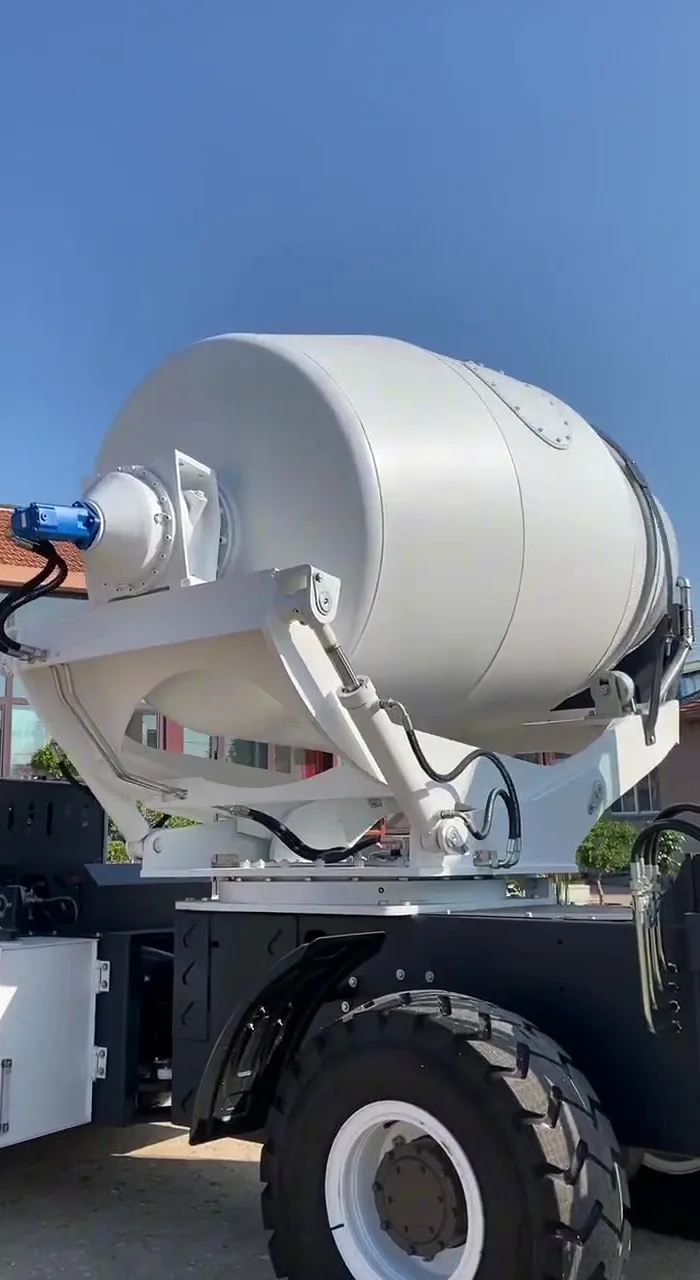
Machine detailThe drum drive: the hydraulic motor sitting on the drum axis, the reduction gear behind it, and the ram that lays the drum over to discharge. 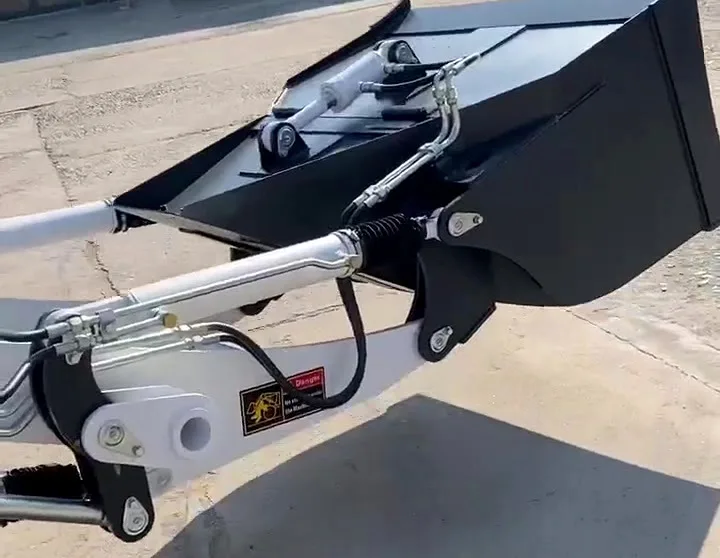
Machine detailThe loading arm — rams, pins, dust boots and hose runs — with the bilingual danger label left exactly where the plant put it. 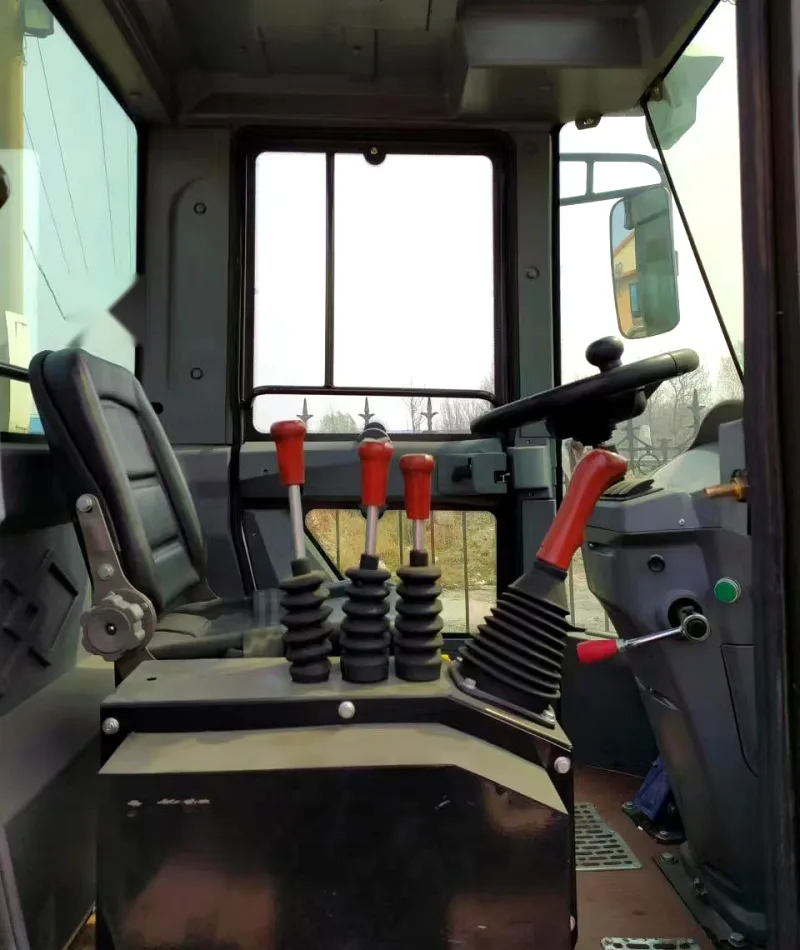
Machine detailThe cab as it is: three levers, a steering column, a suspension seat. Not a rendering, and not tidied up for the photograph. 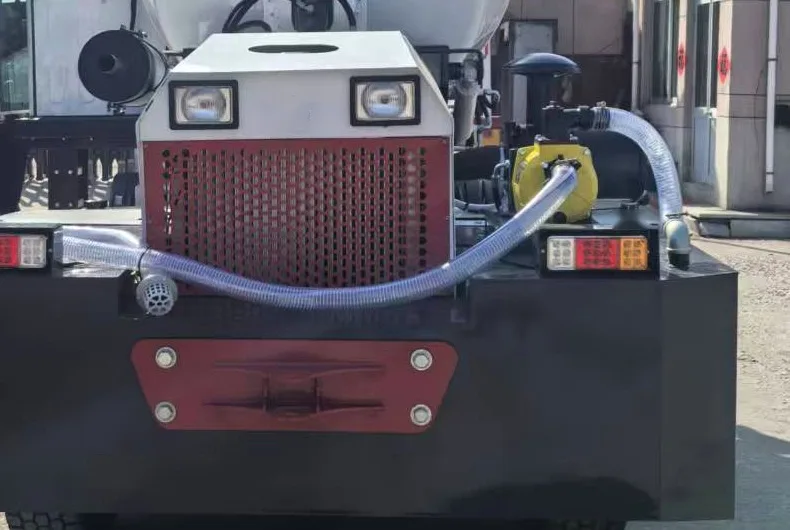
Machine detailThe rear end: radiator, lamps, and the external water pump with its suction hose — the option that lets the machine draw its own water on site.
At a supply partner's plant
Photographed at plants we buy from. They are not ours, and we do not present them as ours.
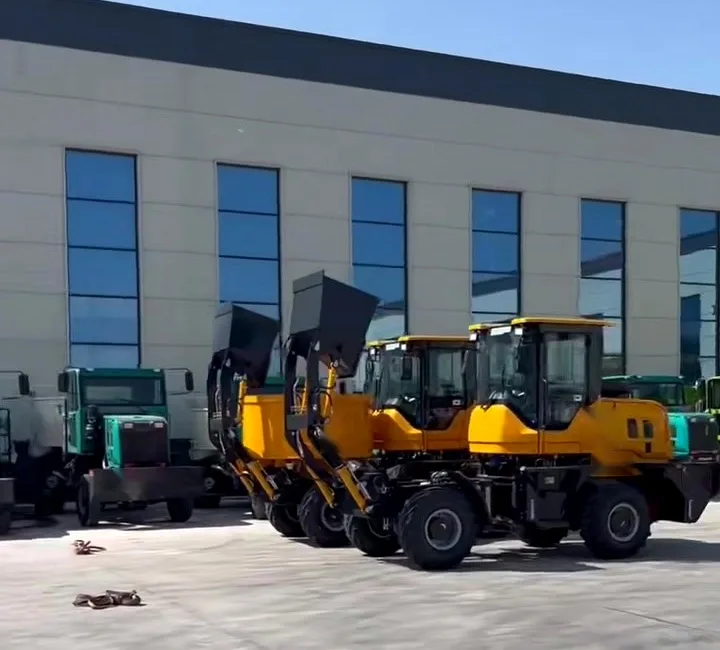
Supply partner's plantThree units of one build in a line, loading buckets at the same height, outside the assembly hall. 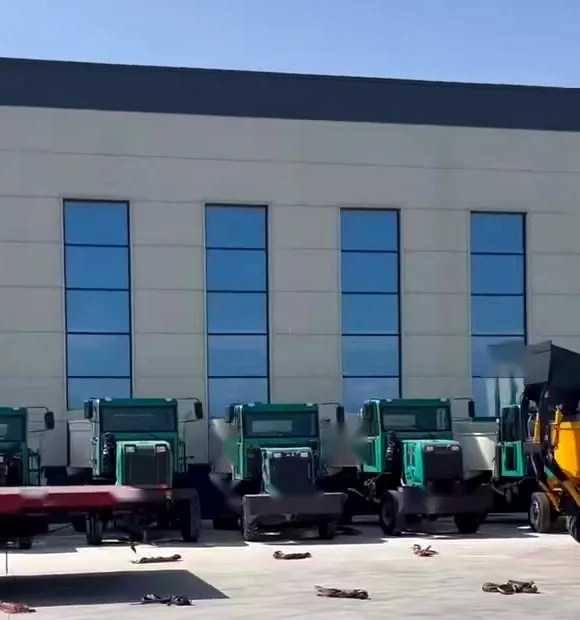
Supply partner's plantCabs and chassis in the yard waiting on drums. What a plant's output looks like on an ordinary working day. 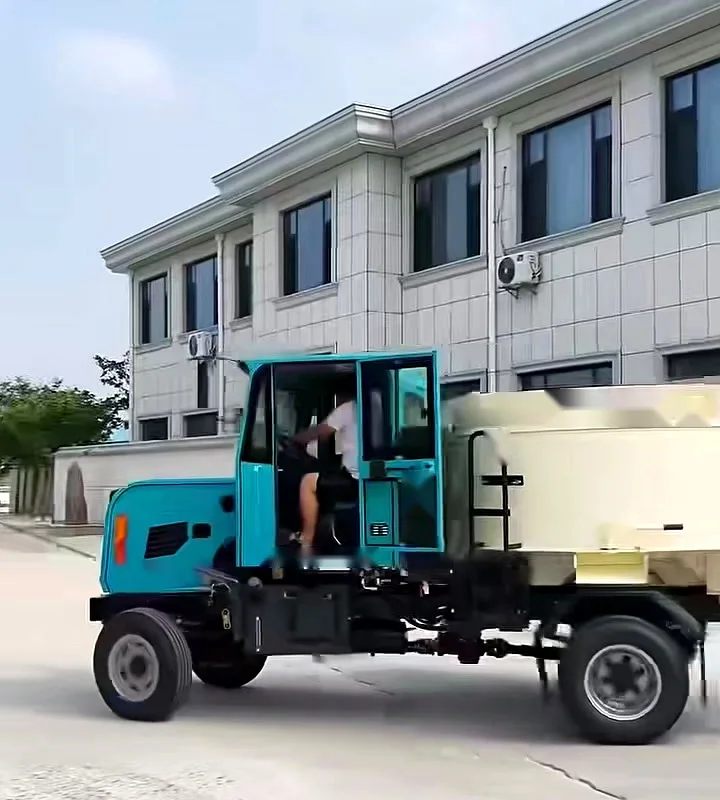
Supply partner's plantA unit under its own power on the plant road — driven, not pushed. This is the point in the week where a pre-shipment inspection happens. 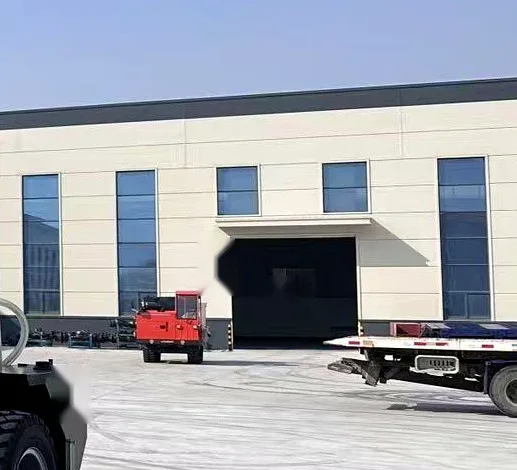
Supply partner's plantThe loading bay: shutter door, hardstanding, a flatbed already backed in. The building's identification has been painted out.
Loading and lashing
A supply partner's shipment. It shows how the machine is loaded and secured — not what we have shipped.
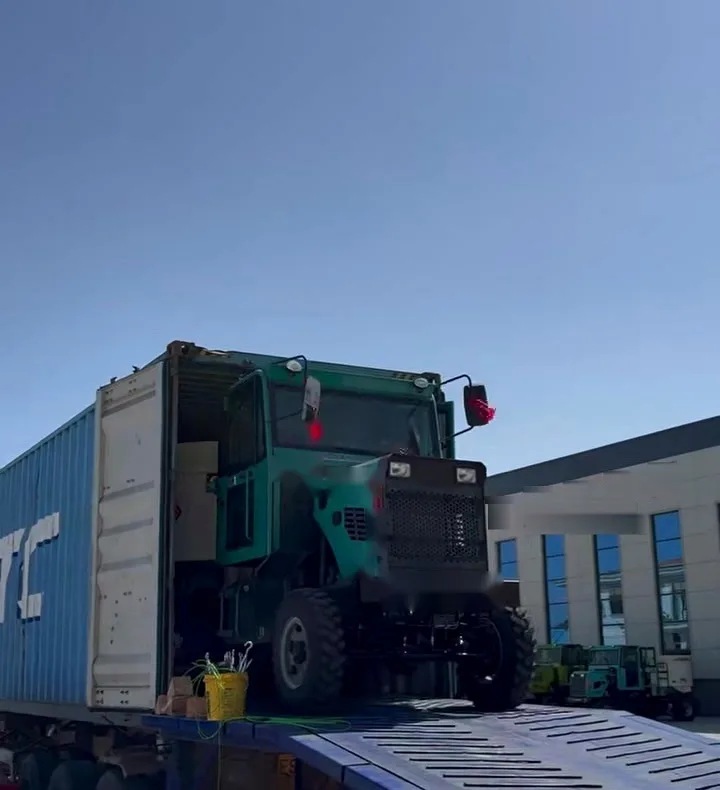
Supply partner's outbound shipmentDriven in, nose out, waiting on the doors. The clearest answer to “will a machine this size go into a standard box”. 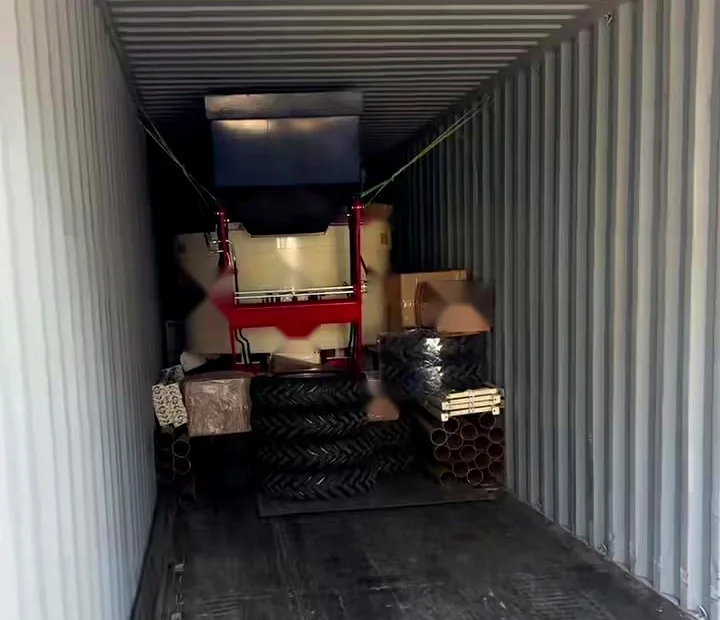
Supply partner's outbound shipmentInside the box: webbing to the lashing points, spare tyres and steel pipe packed around the frame, cartons of parts on the floor. 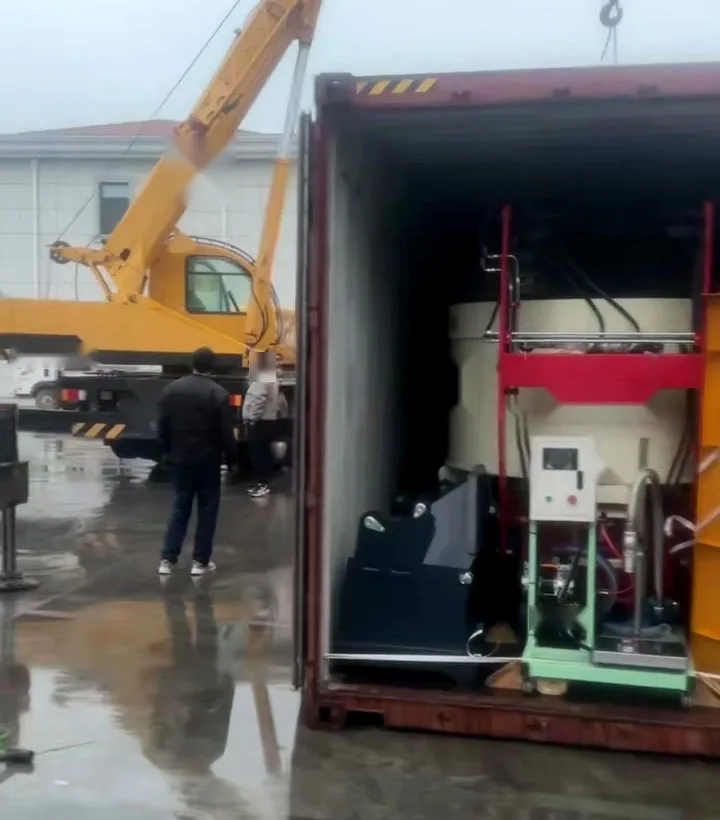
Supply partner's outbound shipmentLoading carries on in the rain. A control cabinet and ancillary plant go into the same box as the machine.
How an order actually runs
An export house for China’s construction-machinery manufacturing base — we go to the plant, inspect, and take the paperwork off your desk.
- 01
Specification
We pin down discharge volume, engine, tyres and the options that matter for your ground conditions, plus the destination port.
A written specification sheet
- 02
Multi-plant quotation
The same specification goes to more than one plant in the cluster. You get one landed figure back, CIF or DDP, not a factory-gate number you still have to work out.
A proforma invoice with the terms in writing
- 03
Pre-shipment inspection
We attend the plant before loading and check the machine against the specification, item by item.
A dated inspection report with photographs
- 04
Certificate & documents
We prepare the export documents and, where your country requires a pre-shipment conformity certificate, we handle the application and build its cost into the quotation.
Bill of lading, packing list, invoice, certificate of origin, conformity certificate
- 05
Landed delivery
Booking, container mode and the handover point are fixed before the machine moves, so the arrival date is a plan rather than a hope.
Shipping advice with the booking and the mode
The boring facts, up front
- Registered name
- Shenzhen Zhongsheng Lianmao Import & Export Co., Ltd.
- Registered address
- Room 1009K9, 10/F, Tairan Cangsong Building, 25 Tairan 7th Road, Futian District, Shenzhen, China
- Registry
- Shenzhen Administration for Market Regulation
- Team
- 10+ years in machinery trade and export
- Partner plants
- 30+ years building heavy equipment
Verify us yourself: China's National Enterprise Credit Information Publicity System is public. Ask us for the business licence and search the registered name there. Open the public registry
We are not a factory, and we do not pretend to be. Here is exactly what that means for you. See how we work →
Tell us the port. We will show our working.
Model, quantity, destination port. You get a CIF or DDP figure with freight, the certificate and the export documents inside it — plus the container mode we would use and why. First reply within 24 hours, China time, Monday to Saturday.